
About Legion Termite Control
Legion Termite Control receives requests through phone or online forms and assigns a technician who arrives with inspection tools. The technician walks the structure and surrounding soil, notes active galleries or frass, and records moisture levels that support termite colonies. Results are reviewed with the homeowner before any product placement or monitoring stations are installed.
Questions about a job? Start on the Legion Termite Control homepage or call (833) 742-9499.
Species-Specific Methods
Technicians match treatment choice to the termite or ant species found rather than applying a single product to every property.
Evidence-Based Reporting
Every inspection note references observed galleries, moisture readings or frass samples so homeowners see the direct link between findings and recommendations.
Minimal Site Disturbance
Work areas are returned to original condition with soil smoothed and all debris removed before the technician leaves the property.
Clear Placement Records
Stations and barrier lines are mapped and shown to the homeowner so future monitoring can occur without guesswork about prior locations.
Call Intake and Scheduling
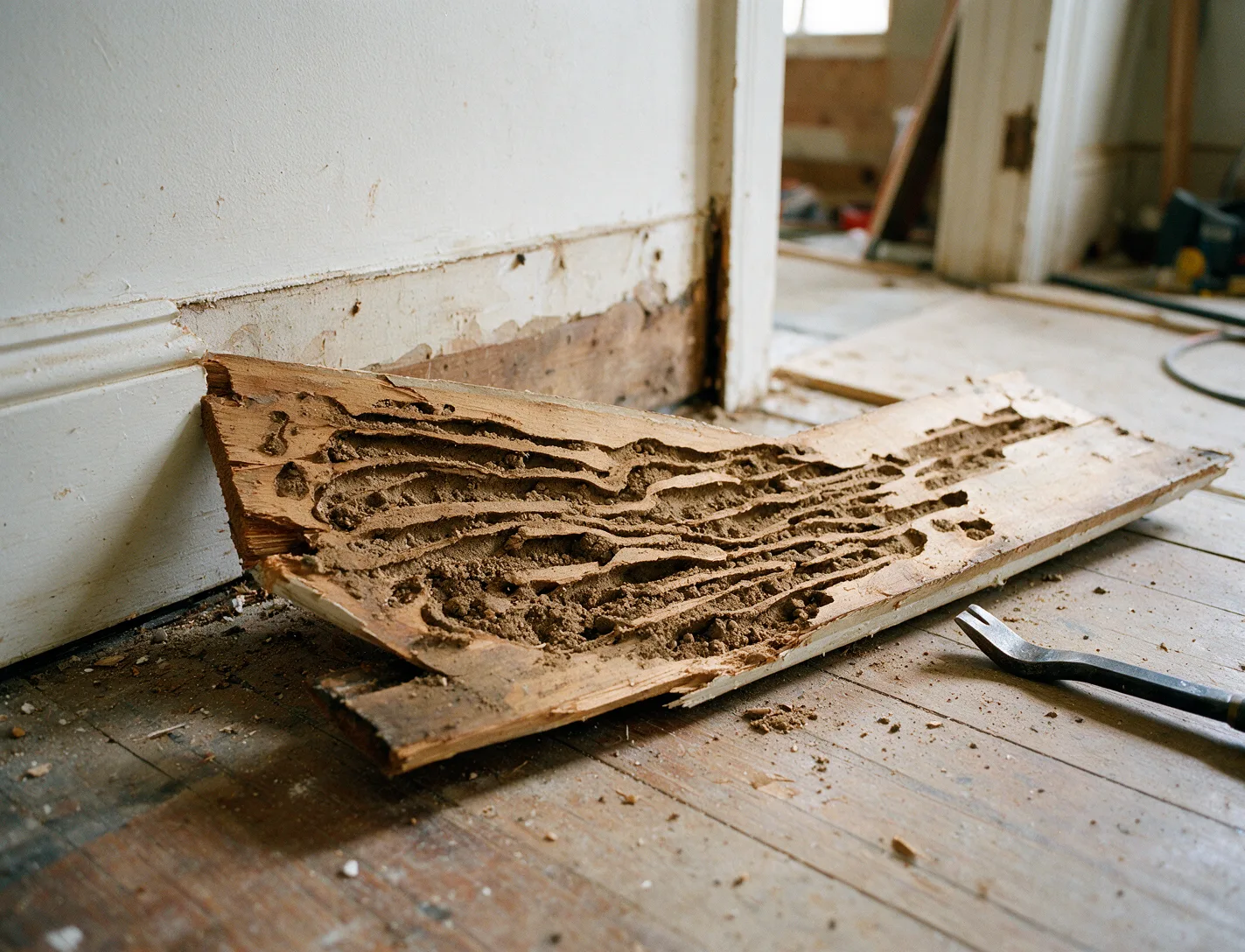
When a request reaches Legion Termite Control, details about visible mud tubes, discarded wings or sawdust piles are recorded so the assigned technician can bring the correct tools and product types. The technician confirms whether the property shows signs of subterranean termites that travel through soil or drywood termites that remain inside structural lumber.
Technicians review the service history of bait stations or previous liquid applications to avoid repeating ineffective placements. This preparation allows the visit to focus on current activity rather than rechecking areas already monitored.
Property Assessment Steps
On arrival the technician begins at the foundation perimeter, checking soil contact points and probing sill plates for carpenter ant galleries or wood-boring beetle exit holes. Interior areas receive attention where plumbing leaks create the constant moisture that attracts subterranean termite workers.
Findings are documented with photographs of active tunnels and moisture readings taken at multiple depths. These measurements help distinguish between species that require bait matrices versus those controlled by a continuous liquid barrier applied to soil.
Explaining Findings and Options
The technician shows the homeowner the exact locations of termite activity and explains how each species moves through wood or soil. Bait systems are described for colonies that forage widely while liquid barriers are outlined for structures needing immediate soil treatment around the foundation.
Pre-construction options are discussed when soil is still exposed, allowing installation of monitoring stations before concrete is poured. Every recommendation is tied directly to the observed evidence rather than general assumptions about the building.
Site Restoration After Service
After stations or barrier applications are placed, the technician removes all equipment packaging and rakes disturbed soil so the yard returns to its original appearance. Excess material is carried away rather than left near the structure where it could attract other pests.
Homeowners are shown the final placement of every station and given a simple map marking their locations for future reference. Follow-up visits are scheduled only when monitoring indicates new activity rather than on a fixed calendar.