
Drywood Termite Treatment in the USA
Drywood termites establish colonies in wood with moisture content below twelve percent. They require no soil connection and produce six sided fecal pellets that accumulate below exit holes. Legion Termite Control technicians examine attic framing, window sills, and furniture for these pellets and for galleries that run across the grain.
Homeowners first remove loose wood scraps and stored lumber from crawl spaces and attics. Our crews then insert a moisture meter into suspect members and mark areas showing pellet clusters or blistered surfaces. This step isolates active sites before any product application begins. During drywood termite treatment Legion Termite Control monitors stations for termite presence in soil samples from the USA.
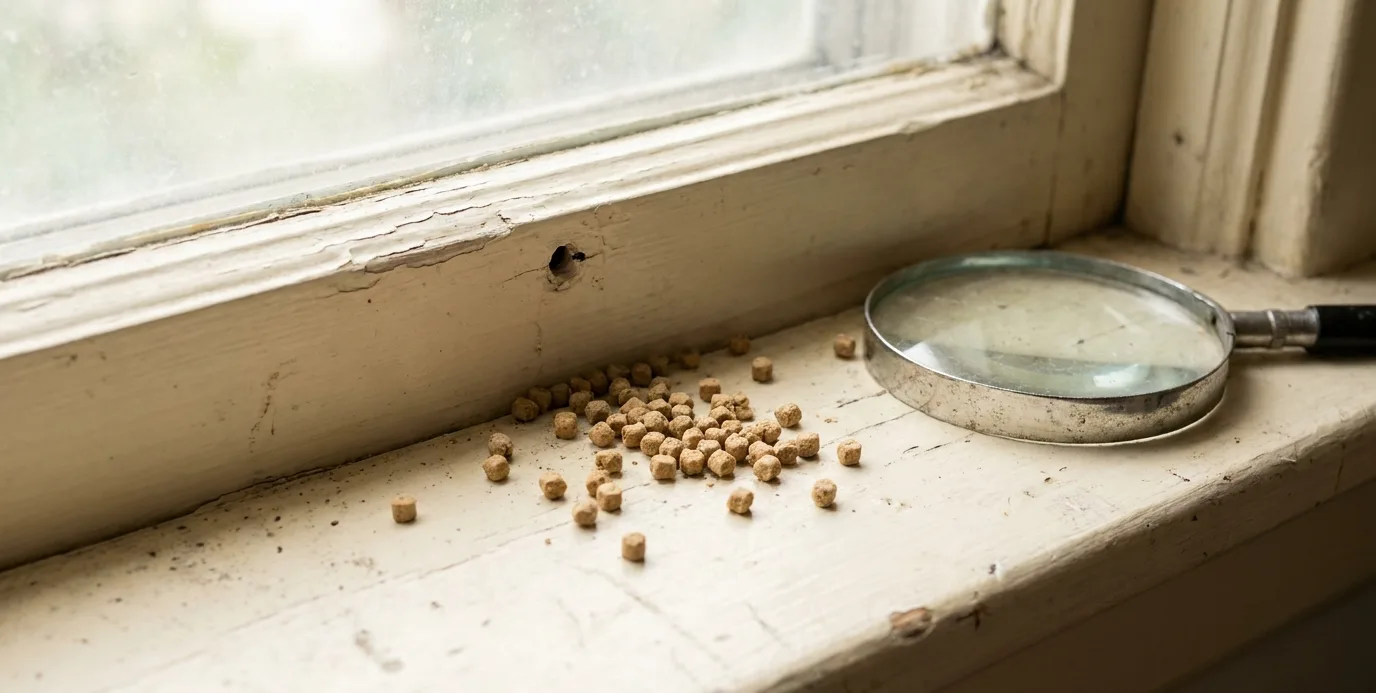
Visible Indicators of Drywood Termite Activity
- Small round exit holes one sixteenth inch across on wood surfaces
- Cone shaped piles of hard six sided fecal pellets beneath timbers
- Blistered or thin wood surface over hidden galleries running across grain
- Discarded translucent wings near window frames after swarm flights
- Hollow sounding wood when tapped with a screwdriver handle
Inspection Steps Performed by Technicians
Technicians begin at the roof line and work downward. They record moisture readings every two feet along joists and rafters. Any reading above eleven percent prompts closer probing with an awl to detect soft spots or frass pockets.
Next they inspect door and window casings for kick out holes. Pellets are collected and examined under magnification to confirm the hexagonal shape unique to drywood species. This distinguishes them from subterranean termite waste which is round and moist.
Furniture legs and picture frames receive the same checks. Colonies often start in these items before moving into structural members. Every finding is mapped on a diagram for the treatment plan.
Localized Treatment Choices
When colonies remain confined to accessible members, technicians drill small angled holes into galleries and inject a borate based dust. The dust adheres to termite bodies and spreads through trophallaxis within the colony.
For larger pockets, a thickened gel formulation is forced into the voids. The gel stays in place on vertical surfaces and continues to contact foraging workers over several weeks. No tenting of the entire structure is required in these cases.
Surface applications of disodium octaborate tetrahydrate follow on exposed wood. This compound penetrates slightly and prevents new larvae from establishing. All drilled holes receive wooden plugs matched to the surrounding grain.
Materials and Application Details
Borate dusts are chosen because they act slowly and allow workers to carry particles back to the queen and soldiers. The active ingredient disrupts the termite digestive system without repelling the insects from treated zones.
Gel carriers contain cellulose that matches the texture of natural wood. This encourages continued feeding and grooming behavior that distributes the active ingredient. Application rates follow label spacing of four to six inches between injection points.
Finished surfaces receive a clear borate solution brushed on at ten percent concentration. The solution leaves no visible residue once dry and remains effective as long as the wood stays dry.
Homeowner Preparation Before Arrival
Clear access to attics and crawl spaces by moving boxes and insulation away from wood members. Remove curtains and blinds from windows so casings can be examined without obstruction. These steps allow technicians to complete mapping in one visit.
Turn off attic fans and close fireplace dampers the night before. This reduces air movement that could scatter pellets before inspection. Pets should be secured in a separate room during the application phase.
Drywood Termite Treatment questions
How do drywood termites differ from subterranean termites in treatment needs?
Drywood termites live entirely inside wood and never need soil contact. Treatments focus on injecting products directly into galleries rather than creating a soil barrier around the foundation. No monitoring stations in the ground are used.
Can homeowners safely apply products themselves before a visit?
Surface sprays sold at retail stores often repel termites deeper into wood without killing the colony. Our technicians use dusts and gels that reach the queen. Homeowners should avoid disturbing pellet piles until inspection occurs.
What happens to wood that has already been damaged?
Damaged sections are probed to determine remaining structural strength. If galleries have removed more than one third of the cross section, technicians note the member for replacement by the property owner after colony elimination is confirmed.
How long does a localized drywood treatment remain effective?
Borate residues stay active inside treated wood for the life of the structure when moisture stays below twelve percent. Reinspection occurs after twelve months to verify no new pellet production and to check untreated wood nearby.
Schedule Drywood Termite Treatment
Contact Legion Termite Control to arrange an inspection of wood members for drywood termite activity across the USA.