
Wood-Boring Beetle Treatment in the USA
Wood-boring beetles deposit eggs in seasoned lumber that contains starch. Larvae tunnel through joists and framing for one to five years before adults emerge through small round exit holes. Our technicians at Legion Termite Control trace these galleries by following the pattern of frass and weakened timber.
Moisture content above twelve percent allows larvae to survive inside hardwood flooring and baseboards. When new furniture or reclaimed beams enter a structure the beetles can spread. Legion Termite Control measures wood moisture and density to decide whether replacement sections or chemical treatment will stop the cycle. Legion Termite Control evaluates wood borings to plan wood-boring beetle treatment steps for beetles in the USA.
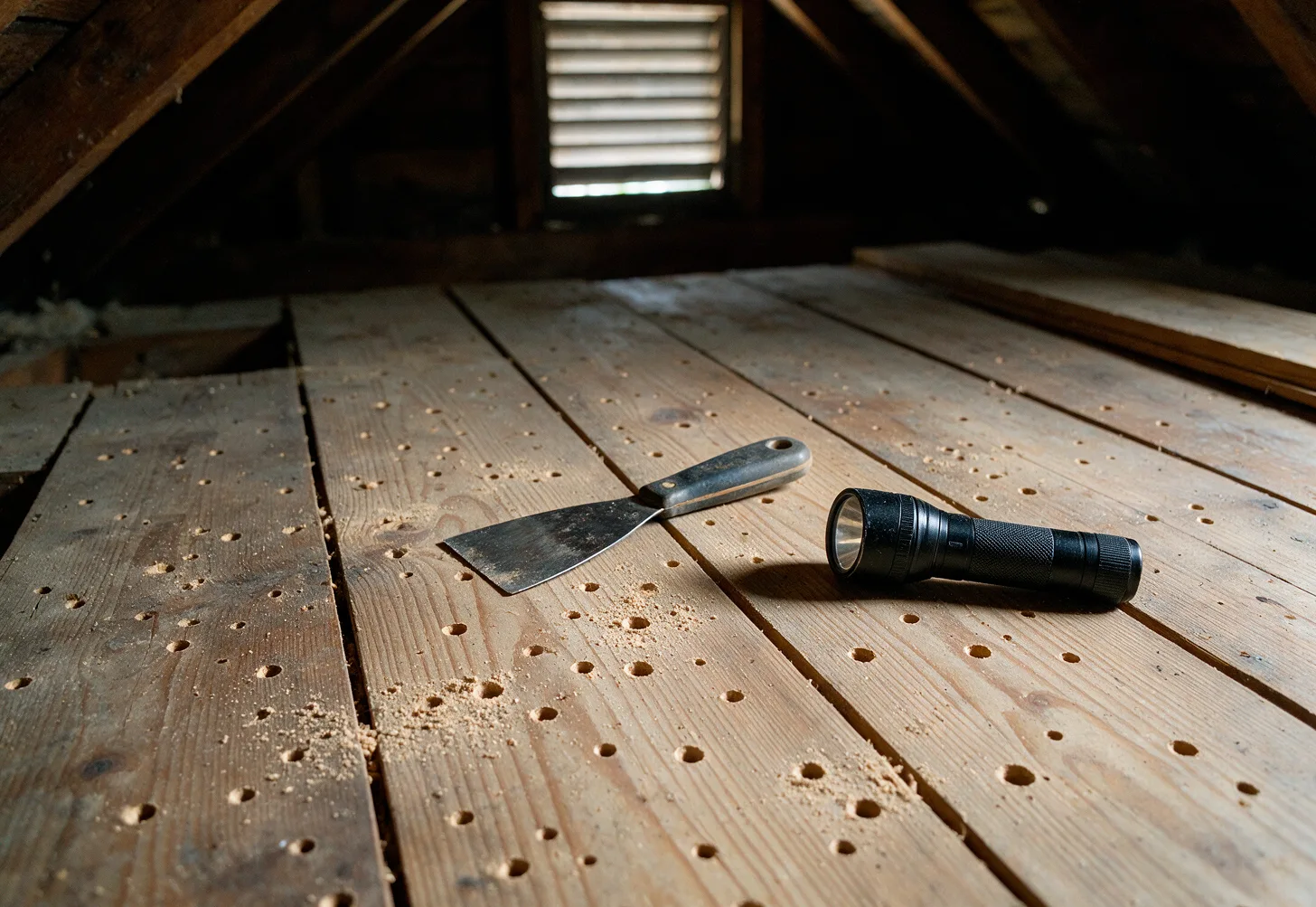
Visible Indicators of Active Wood-Boring Beetle Activity
- Tiny round exit holes clustered along joist edges
- Fine talcum-like frass piles beneath baseboards
- Tunnels that run parallel to the wood grain
- Weak spots in flooring that give under foot pressure
- Adult beetles found on windowsills during spring months
How Wood-Boring Beetles Enter and Develop Inside Structures
Beetles arrive inside lumber cut from infested trees or in finished items such as hardwood floors and cabinets. Females lay eggs in pores or cracks once the wood has dried below eighteen percent moisture. The larvae then consume cellulose for several years without showing surface damage until the first adult emerges.
Different species leave distinct frass textures. Powderpost beetles produce very fine powder while old house borers leave cylindrical pellets. Legion Termite Control records these differences during each inspection so the correct product reaches the right gallery depth.
Inspection Steps Our Technicians Follow
Technicians start by probing every accessible joist and sill plate with an awl to locate soft pockets created by feeding larvae. They also measure wood moisture at multiple depths because beetles cannot complete development in wood below ten percent. Flashlights angled across surfaces reveal the outline of exit holes and the direction of tunnels.
Frass samples are collected and examined under magnification to confirm species. Areas behind drywall or under insulation receive extra attention since beetles often remain hidden until adults emerge. Legion Termite Control documents every finding on a diagram so treatment targets only active zones.
Treatment Choices and Materials Applied
When galleries are limited to exposed beams a borate solution is brushed or injected directly into the exit holes. The material penetrates several millimeters into the wood and remains toxic to any larvae still feeding. Heavily damaged sections are cut away and replaced with kiln-dried lumber that receives a surface borate coating before installation.
For widespread activity in inaccessible framing a whole-structure treatment using approved insecticides may be selected. Legion Termite Control chooses products labeled for wood-boring beetles and applies them according to label rates so residual protection stays in place for years.
What Homeowners Can Do Before Technicians Arrive
Reduce indoor humidity with dehumidifiers so wood moisture stays below twelve percent. Store firewood and scrap lumber outside and away from foundation walls. Vacuum visible frass piles without disturbing the surrounding wood so fresh activity remains easy to spot later.
Note any new holes or pellets that appear over the next several weeks. Avoid painting or sealing surfaces until after the inspection because coatings can hide exit holes. Legion Termite Control uses these observations to focus the first visit on the most likely source locations.
Wood-Boring Beetle Treatment questions
How long does Wood-Boring Beetle Treatment take to stop new damage?
Borate treatments begin killing larvae within days after the solution reaches gallery walls. New exit holes should cease appearing after one full emergence season once all active beetles have been reached.
Can homeowners apply over-the-counter sprays themselves?
Surface sprays rarely reach larvae feeding deep inside joists. Without pressure injection or wood removal the colony continues developing. Professional equipment measures penetration and confirms that active galleries receive the full labeled rate.
Will replacing damaged boards prevent beetles from returning?
New lumber must be protected with a borate coating before installation. Otherwise arriving beetles can lay eggs in the replacement pieces. Legion Termite Control treats both new and adjacent existing wood during the same visit.
Do all wood-boring beetles require the same treatment approach?
Powderpost species respond to borates while certain longhorn beetles may need removal of the entire infested member. Legion Termite Control identifies the exact species first so the chosen method matches the beetle life cycle and gallery location.
Schedule Wood-Boring Beetle Treatment
Contact Legion Termite Control to arrange an inspection that identifies active galleries and selects the correct treatment for your structure.