
Termite Bait Systems in the USA
Subterranean termites from genera such as Reticulitermes and Coptotermes establish colonies in soil and travel to wood through shelter tubes. They require constant moisture and cellulose contact. Legion Termite Control deploys Termite Bait Systems that use stations filled with slow-acting chitin synthesis inhibitors. Workers carry the material back to the queen and nestmates, gradually reducing the colony without direct wood treatment.
Technicians locate active foraging paths by reading soil moisture gradients and wood-to-soil contact points. Stations are inserted at intervals around the foundation and checked on a schedule that tracks consumption rates. When bait uptake stops and fresh tubes no longer appear, the colony pressure drops. Homeowners first remove cellulose debris and fix roof or plumbing leaks that keep soil damp. Legion Termite Control inspects crawl spaces as part of termite bait systems to spot beetle frass in USA homes.
Visible Indicators of Active Subterranean Termite Foraging
- Mud tubes climbing foundation walls or piers in straight vertical lines.
- Hollow sounding wood when tapped near soil grade or crawl space edges.
- Discarded wings piled near windows or doors after spring or fall flights.
- Blistered paint or fine frass along baseboards where galleries run parallel to grain.
- Soft floor sections or door frames that give under pressure near exterior walls.
How Termite Bait Systems Reach the Colony
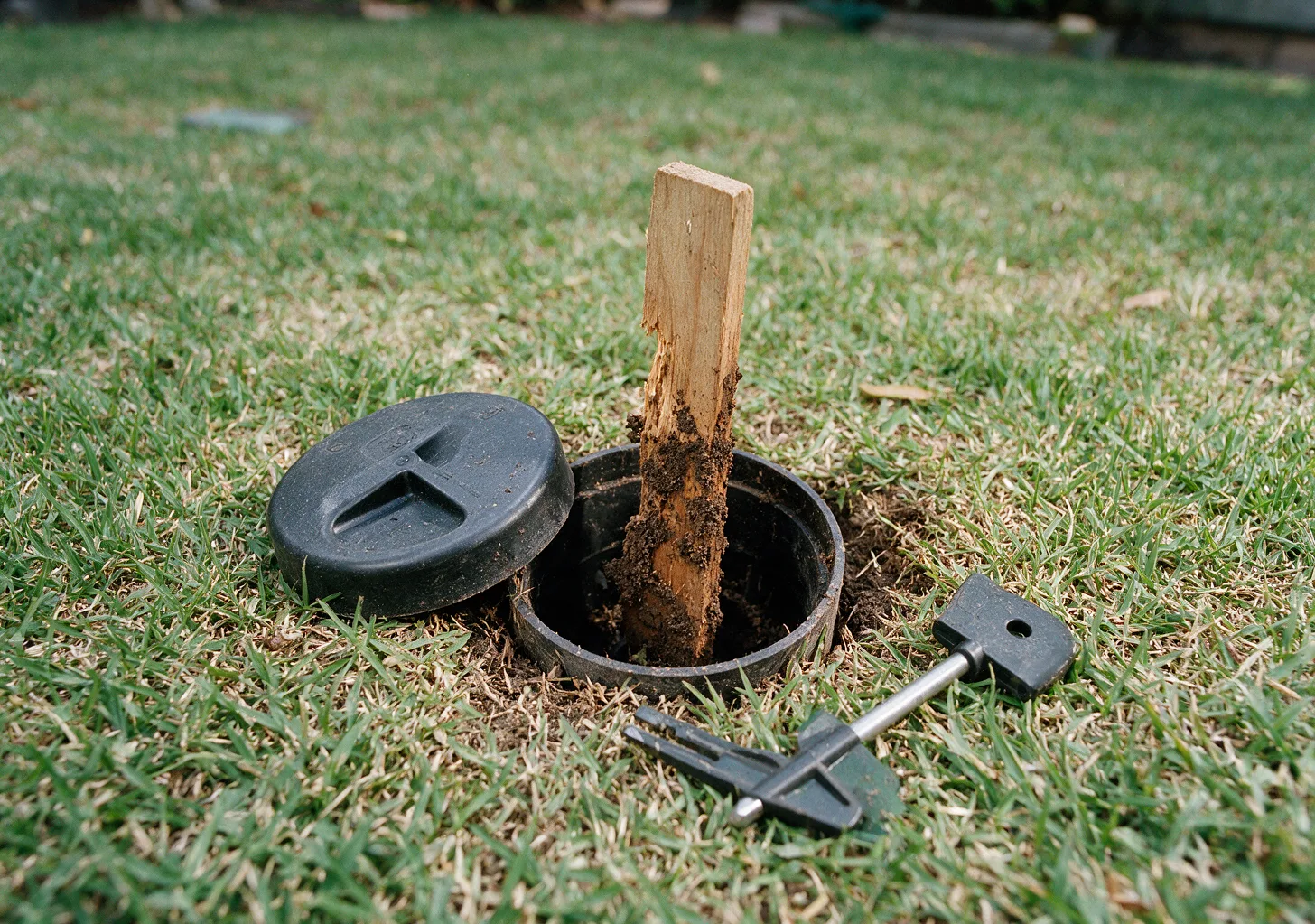
Technicians place in-ground stations every ten to twenty feet along the perimeter where soil meets foundation. Each station holds a cellulose matrix treated with an active ingredient such as hexaflumuron or noviflumuron. Foraging workers ingest the material, return to the nest, and pass it through trophallaxis. The inhibitor prevents molting, so the population declines over months as workers and the queen die.
Above-ground stations attach directly to active mud tubes or damaged wood when interior activity is confirmed. These units use the same bait matrix and allow immediate access to the existing foraging route. Legion Termite Control records station numbers, bait consumption amounts, and tube locations on each visit so changes in activity become measurable over time.
Inspection Steps Before Station Placement
Our technicians begin by probing soil at multiple depths with a moisture meter to find zones above twenty percent. They examine the sill plate, joists, and any wood in direct contact with grade for galleries running along the grain. Flashlights and mirrors reveal shelter tubes on the underside of decks or porch slabs where light rarely reaches.
Wood moisture content is measured at suspected entry points with a pin-type meter. Areas showing elevated readings receive priority station placement. Technicians also note drainage patterns that keep soil against the foundation wet, because persistent moisture sustains the foraging pressure that bait systems must overcome.
Materials and Installation Details
Stations consist of a perforated plastic housing driven into the soil so the top sits flush with grade. Inside sits a bait cartridge made of compressed wood or paper treated with the insect growth regulator. Replacement cartridges carry the same formulation and fit the same housing so only the matrix is changed during service visits.
When tubes are found on the structure, above-ground units clip over the tube or fasten to the wood surface. These units remain sealed until inspection and contain the identical active ingredient. Legion Termite Control selects station density according to the length of foundation perimeter and the number of active tubes mapped during the initial survey.
Homeowner Steps Before Technicians Arrive
Clear firewood, lumber scraps, and cardboard at least twelve inches from the foundation so technicians can place stations without obstruction. Move stored items away from exterior walls inside the crawl space or basement to allow full inspection of the sill plate. Note any recurring damp spots after rain and mark them for review.
Turn off irrigation heads aimed at the foundation and repair any visible leaks from hose bibs or downspouts. These actions reduce soil moisture that supports termite activity and give the bait stations a clearer read on colony response once installed.
Termite Bait Systems questions
How long does it take for Termite Bait Systems to reduce activity?
Consumption begins within weeks once stations intercept foraging workers. Colony decline shows as reduced tube rebuilding and lower bait intake over three to twelve months depending on colony size and season. Technicians track these metrics on each scheduled visit.
What active ingredients are used inside the stations?
Most cartridges contain chitin synthesis inhibitors such as hexaflumuron or noviflumuron. These compounds prevent proper molting when passed through the colony by trophallaxis. The slow action allows workers to distribute material before effects appear.
Can Termite Bait Systems be used with existing liquid barriers?
Stations can supplement a liquid treatment when activity persists inside the treated zone. Technicians place them outside the barrier line to intercept new foragers. The two methods operate independently and require separate monitoring schedules.
How often are the stations inspected after installation?
Initial checks occur every thirty to forty-five days to record consumption and replace cartridges. Once uptake drops and no fresh tubes appear, intervals extend to quarterly or semi-annual visits. Records of each reading guide adjustments to station count or location.
Schedule Termite Bait Systems Placement
Contact Legion Termite Control to map stations around the foundation and begin monitoring foraging activity.