
Liquid Termite Barrier in the USA
Subterranean termites construct mud tubes from soil to reach cellulose in framing and trim. Liquid Termite Barrier work focuses on the perimeter soil where these colonies move upward. Our technicians apply non-repellent termiticides that remain active in the ground and transfer between foraging workers and the colony. The product is placed in a continuous treated zone rather than as a surface spray. This approach interrupts the route from nest to wood without requiring removal of existing tubes first.
Moisture in soil and foundation contact points draws termites upward. Legion Termite Control measures soil grade, checks for cracks in concrete, and notes any wood debris left against the structure. Technicians then create narrow trenches or use rodding tools to place the liquid along the footing. The goal is a treated band that termites must cross when they leave the soil. Homeowners can begin by clearing mulch and stored lumber from the foundation line before the visit. Before liquid termite barrier begins Legion Termite Control reviews moisture levels that attract carpenter ants in the USA.
Surface evidence of termite movement from soil
- Pencil-thick mud tubes running vertically along the base of foundation walls from soil contact points.
- Hollow or blistered wood near grade where workers have removed cellulose from the interior.
- Discarded wings near entry points after swarmers leave the colony to establish new nests.
- Small piles of frass mixed with soil pushed out of active galleries in sill plates.
- Soft spots in floor joists directly above areas where the foundation meets untreated soil.
Points technicians examine before placing the barrier
Technicians begin at the exterior grade line and look for changes in soil moisture that allow termite survival. They probe the soil with a steel rod every few feet to locate voids or soft zones created by previous activity. Foundation walls receive close inspection for hairline cracks that serve as travel routes. Inside the crawl space or basement, the team checks the sill plate and rim joist for mud deposits that indicate recent foraging. Soil samples are taken at intervals to confirm the depth of the footing and any backfill that could channel termites.
Measurements include the distance from wood to soil and the slope that directs water toward the foundation. Any cellulose debris or form boards left in the soil during original construction are noted because they become food sources that keep colonies near the structure. The inspection also records utility penetrations and expansion joints where a continuous barrier must be installed with extra care. These observations determine whether trenching alone is sufficient or whether drilling through the slab is required at specific locations.
Materials and placement methods used in the barrier
The liquid products chosen contain active ingredients such as fipronil or imidacloprid that termites do not detect. Workers pick up the material on their bodies and carry it back to the colony where it spreads through grooming and feeding. Application starts with a narrow trench excavated along the exterior footing to a depth that reaches undisturbed soil. The diluted termiticide is applied at labeled rates while backfilling occurs so the treated soil remains in direct contact with the foundation.
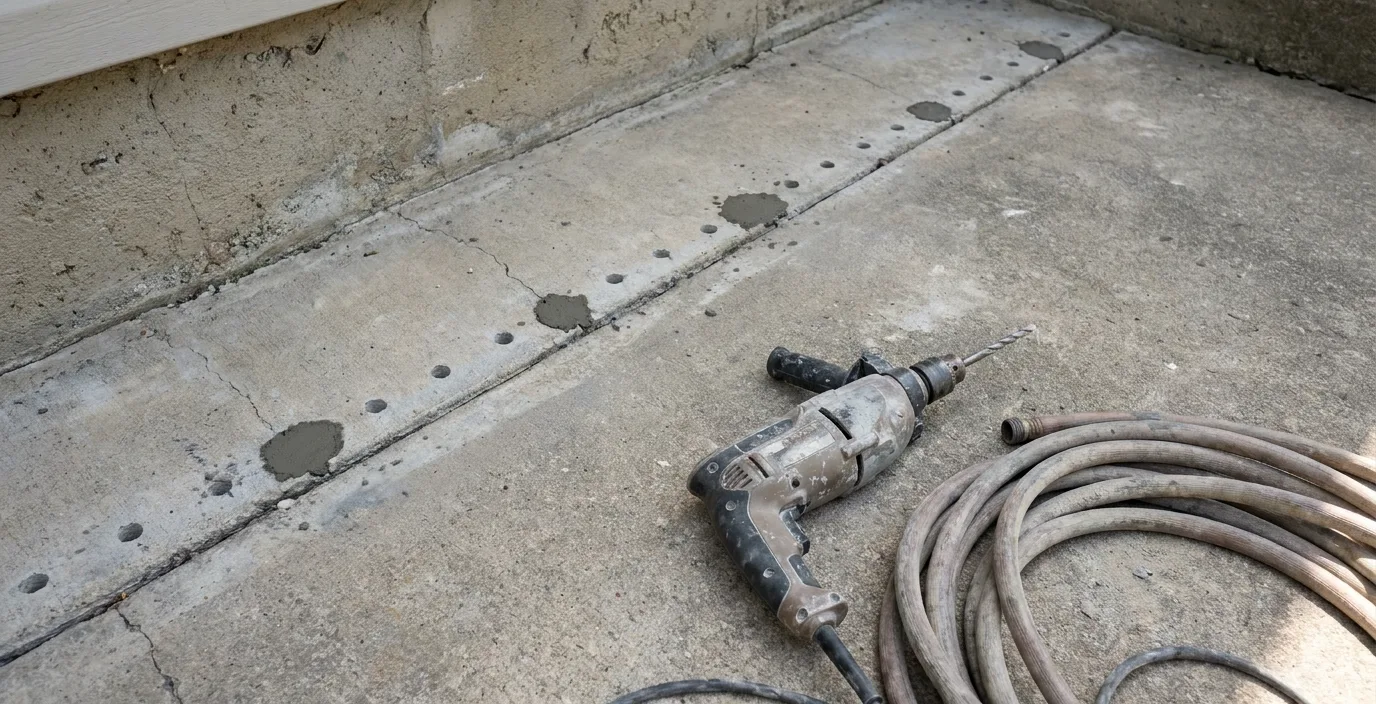
At slab-on-grade areas, holes are drilled through the concrete at regular spacing and the product is injected beneath the slab using a sub-slab injector. Interior perimeter walls in basements receive the same treatment through rodding or drilling where access from outside is blocked. All injection points are sealed after use. The process creates an unbroken treated band that foraging termites encounter before they can reach structural wood.
Steps a homeowner can take prior to treatment
Remove all firewood, lumber scraps, and cardboard from direct soil contact along the foundation. These items provide food and shelter that keep colonies close to the treated zone. Trim vegetation so that at least twelve inches of bare soil remains visible around the entire perimeter. This clearance allows technicians to excavate the trench without obstruction and ensures the liquid reaches the footing depth.
Repair any dripping exterior faucets or downspout extensions that keep soil saturated near the structure. Excess moisture supports termite survival in the treated band. Move stored items away from the foundation walls inside the crawl space or basement so the team can inspect and treat the interior perimeter if needed. These preparations let the application proceed without delays and help maintain the integrity of the treated soil after the work is finished.
Follow-up monitoring after the barrier is installed
Once the liquid has been placed, technicians install small monitoring stations at intervals around the perimeter. These stations contain untreated wood that can be checked on later visits for new activity. The stations sit in the soil outside the treated band so any returning termites are detected before they reach the structure. Records of station locations and initial readings are kept for comparison during future inspections.
Homeowners receive guidance on keeping the treated zone undisturbed. No new mulch or soil should be added directly against the foundation, and irrigation heads should be adjusted so water does not wash away the treated layer. Annual checks of the stations and the foundation line allow technicians to confirm that the barrier remains effective and to address any new mud tubes promptly.
Liquid Termite Barrier questions
How does a Liquid Termite Barrier stop foraging termites?
The treatment places a band of non-repellent termiticide in the soil where subterranean termites travel upward. Workers cross the treated zone, pick up the active ingredient, and carry it back to the colony. Transfer through grooming and feeding reduces the population over time without requiring direct contact with every individual.
What soil conditions affect how the barrier is applied?
Technicians evaluate compaction, backfill type, and moisture content because these factors influence how the liquid moves through the ground. Heavy clay may require more rodding pressure while sandy soils can need slower application to prevent runoff. The goal is uniform coverage along the footing regardless of soil texture.
Can the barrier be installed on both sides of a foundation wall?
When access exists on both sides, treatment is applied to the interior and exterior to close gaps where termites could bypass the treated soil. Slab edges, expansion joints, and utility entries receive extra attention so the treated zone remains continuous around the entire structure.
How long does the liquid remain effective in the soil?
The active ingredients bind to soil particles and break down slowly under normal conditions. Effectiveness depends on soil chemistry, rainfall patterns, and whether the treated zone is later disturbed by excavation or heavy irrigation. Regular station checks help determine when additional application may be needed.
Request Liquid Termite Barrier evaluation
Legion Termite Control examines soil contact points and foundation details to place the barrier correctly.