
Carpenter Ant Control in the USA
Carpenter ants excavate galleries in moist or decaying wood rather than consuming cellulose like termites. Our technicians trace foraging trails back to parent colonies often located in wall voids or roof eaves where constant dampness allows workers to expand satellite nests without direct soil contact.
Homeowners first reduce standing water around foundations and clear leaf litter that retains moisture against siding. Legion Termite Control then confirms active galleries by listening for rustling sounds inside wood and checking for coarse frass piles that differ in texture from termite droppings. After Legion Termite Control confirms termite activity signs during carpenter ant control jobs across the USA.
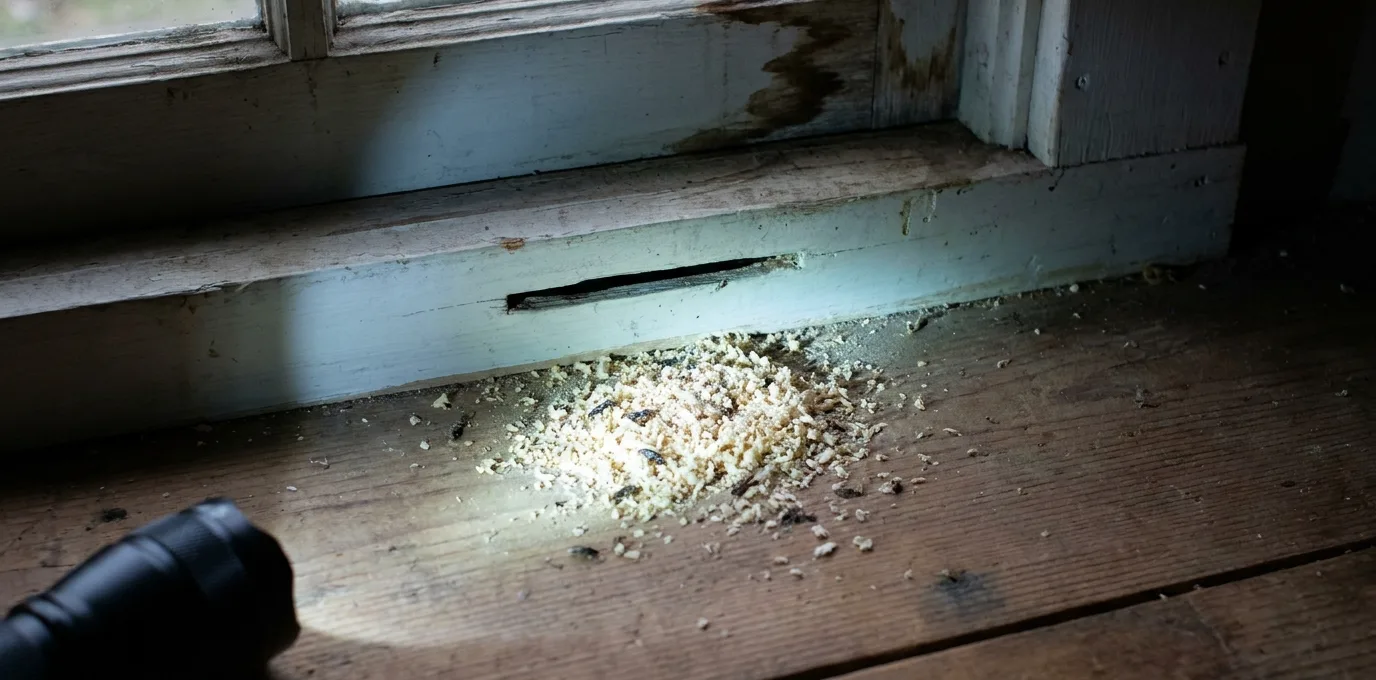
Visible Indicators of Carpenter Ant Activity
- Large black or reddish workers on interior surfaces after dark
- Coarse sawdust piles mixed with insect body parts near baseboards
- Hollow sounding wood when tapped in moisture damaged areas
- Consistent nighttime trails along wires or pipes to exterior trees
- Small clean exit holes in trim without mud tubes or soil
Moisture Sources That Support Nesting
Carpenter ants require wood with elevated moisture content above twenty percent to establish galleries. Our technicians use moisture meters on sill plates, window frames and deck ledger boards to locate hidden damp zones created by plumbing leaks or poor drainage.
Once identified, crews recommend correcting gutters and downspouts before any product application so new colonies cannot reestablish after the current nests are eliminated.
Inspection Steps Performed by Technicians
Technicians begin at the exterior by examining tree limbs touching the structure and checking soffits for entry points. They follow ant traffic indoors using flashlights at night to map routes from feeding sites back to wall voids or attic insulation.
Measurements include gallery depth probed with a thin wire and temperature differentials that indicate active nests versus abandoned tunnels. This data determines whether dust or bait placement will reach the queen.
Targeted Product Placement Methods
Gel baits containing slow acting toxicants are placed along confirmed trails so workers carry the material into the main colony. Insecticidal dusts are injected through small holes drilled into void spaces where meters indicate high moisture and frass accumulation.
Liquid barriers are applied only at foundation cracks when satellite colonies are confirmed in soil contact areas, avoiding unnecessary surface treatments that fail to reach hidden parent nests.
Homeowner Actions Before Arrival
Remove potted plants and stacked firewood from foundation walls to expose potential entry points. Note locations and times when ants appear so technicians can prioritize those zones during the initial walkthrough.
Avoid using over the counter sprays that scatter colonies and make trail mapping more difficult. Legion Termite Control needs clear access to baseboards and utility penetrations on the day of service.
Carpenter Ant Control questions
How do carpenter ants differ from termites in wood damage?
Carpenter ants produce coarse frass containing wood fibers and body parts while termites leave fine sawdust and mud tubes. Ant galleries follow the grain and remain dry inside whereas termite damage shows soil and carton material.
Will carpenter ants damage load bearing beams?
They excavate only moist sections and rarely remove enough structural wood to cause failure unless decay has already weakened the member. Treatment focuses on eliminating the colony and correcting the moisture source that allowed nesting.
Can baits alone eliminate an entire colony?
Gel baits work when the parent nest is reachable by foraging workers carrying the material back to the queen. Large satellite colonies in separate voids often require additional dust applications to reach all active sites.
What happens if ants return after treatment?
Return visits occur when new moisture develops or untreated satellite nests remain. Technicians reinspect with moisture meters and extend bait or dust placements to any newly active galleries discovered during follow up.
Schedule Carpenter Ant Control
Contact Legion Termite Control to map colonies and apply targeted treatments across the USA.